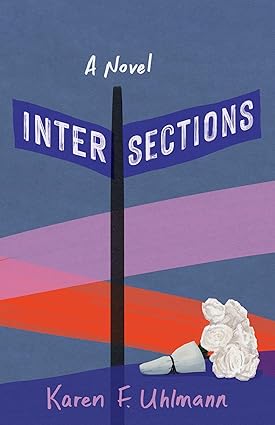
Intersections by Karen F. Uhlmann


Intersections by Karen F. Uhlmann
Publisher: She Writes Press
Genre: Contemporary, Fiction
Rating: 4 stars
Reviewed by Cholla

Style-guru Charlotte Oakes sells beautiful lifestyles, but her mentally ill daughter is an addict, her long marriage is dead, and she is pregnant with her ex-lover’s baby. Stunned after witnessing a hit-and-run in Chicago that leaves a child dead, Charlotte thinks she sees her Prius fleeing the scene. Her troubled daughter, Libby, is the only one who could have been driving.

His partner and best friend killed in a drug bust, police officer Ed Kelly learns that forensics has found that the fatal bullet came from Ed’s gun. Under internal investigation, Ed copes by filming cars at the site of the recent hit-and-run, hoping to catch the child’s killer. There, he notices Charlotte’s pilgrimages to the makeshift memorial, and over the weeks, the two become unlikely friends sharing intimate stories. But Charlotte won’t trust him with her most vulnerable secret of all: her suspicions about her daughter’s involvement in the accident.

When Ed finally learns the truth about, he struggles with his beliefs and duties. If he keeps quiet, he has breached his commitment to the law. But if he does the right thing as an officer, he may send Libby to jail—and lose Charlotte.
A tragic twist of fate brought them together. Friendship binds them together. But one person’s secrets might just tear them apart. Will these two unlikely strangers turned friends be able to navigate the chaos and lies and find their way through it all?

To have a child die so early in a book really shook me, especially since I wasn’t reading one of my usual police procedurals. However, the hit and run aspect drew me in, made me want to know the truth – was it Charlotte’s Prius or was it just a similar car? These are things I had to know and fast.

Charlotte Oakes is an interesting character in that she’s not a great person, but you root for her anyway. She loves her daughter, fights to give her the chances she deserves, but she’s also cheating on her husband. Despite that, she shows over and over how loyal and dedicated she is to her daughter, Libby, and later to her new friend, Ed.

I hate to admit it, but for the majority of the book, I did not like Libby at all. This makes me cringe because the poor girl had issues, things that were actually compounded by her father’s actions – or lack thereof. But I still had a hard time whenever she was in Chicago with Charlotte. However, she does get some major character growth, which made me happy.

Ed Kelly I liked immediately. He reminded me of the police officers you’d find in older TV shows – a bit chubby, genial, and focused on just doing the best job he could do, given any set of circumstances. He’s also struggling since his partner was killed. He and Charlotte make an odd pair, but they definitely work. They both bring something unique to the situation to help the other.

Intersections is more a story about families and friends than it is about discovering who was driving the car. While I hadn’t been expecting that, it still worked and made for an engaging and enjoyable novel. I did feel like the conclusion to the hit and run was a bit anti-climactic, but the end results were reasonable and understandable. Overall, this was a well-written story with complex and likable characters. I’d highly recommend it to anyone who enjoys domestic fiction or stories about complicated families and how they interact.
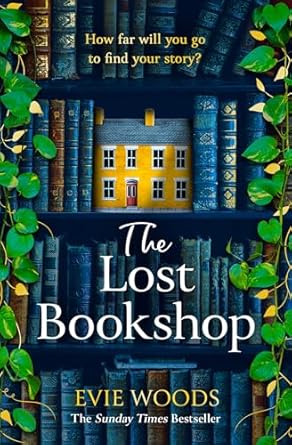
The Lost Bookshop by Evie Woods


The Lost Bookshop by Evie Woods
Publisher: One More Chapter
Genre: Historical, Fiction
Rating: 5 stars
Reviewed by Snowdrop

‘The thing about books,’ she said, ‘is that they help you to imagine a life bigger and better than you could ever dream of.’

On a quiet street in Dublin, a lost bookshop is waiting to be found…

For too long, Opaline, Martha and Henry have been the side characters in their own lives.

But when a vanishing bookshop casts its spell, these three unsuspecting strangers will discover that their own stories are every bit as extraordinary as the ones found in the pages of their beloved books. And by unlocking the secrets of the shelves, they find themselves transported to a world of wonder… where nothing is as it seems.

What a great read. This is a read for booklovers, for mystery readers, and for plain old enjoyment. The beginning is about women who left homes on their own due to abuse and ill treatment. Though at different decades, both left at a time when a woman being alone was quite frightening. But there is much more to The Lost Bookshop. The players in this story are often in different decades. This creates many different conditions that each must face. We are allowed to live in each of these.


The generations of characters covered has as many twists and turns as the mystery of the bookshop does. And yet somehow, it all melds together. I am often not fond of chapter after chapter of varying characters, but somehow Evie Woods sews this all together in a seamless, beautiful story. Characters of generations apart are somehow intertwined and yet each has his or her own story. It was smooth when I thought it would be bumpy. It was just beautiful writing.

5 GIANT stars. You have to read this.

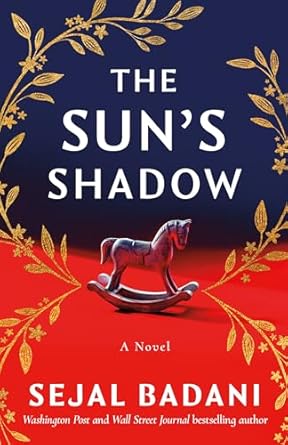
The Sun’s Shadow by Sejal Badani


The Sun’s Shadow by Sejal Badani
Publisher: Lake Union Publishing
Genre: Contemporary, Fiction
Rating: 4 Stars
Reviewed by Cholla

Celine’s life is spiraling out of control. She’s in danger of losing the beloved equestrian farm that was her childhood home. Her distant husband, Eric, is devoting a suspicious amount of time to a stunning new colleague. Then her young son, Brian, receives a devastating cancer diagnosis. As her life falls apart, she faces an impossible fight

Felicity has uprooted her career and her teenage son, Justin, to get closer to Eric. She’s tired of keeping his secrets—that Eric’s frequent “business trips” have been time spent with her and Justin. Felicity is determined to get her happily ever after, even if it means confronting Celine at a delicate time.

But when Brian’s prognosis worsens, and a transplant from Justin becomes his best chance at survival, Felicity must make a wrenching decision about her son’s well-being—and Celine must accept that the “other woman” is her only hope.

In another life Celine and Felicity might have been friends. Can they put aside the pain between them to do what’s best for their families—and their own futures?

Celine thought her life was going well. She’s running her childhood horse farm, has a successful husband, a smart and athletic son, everything she thought she ever wanted. And then, the worst thing imaginable happens and Ben, her twelve-year-old son, is diagnosed with cancer.

Throughout the whole book, Celine shows a lot of strength and courage. She has moments of pettiness and anger, both of which are understandable. I liked the way that she didn’t focus completely on Ben though, which might sound weird at first, but she spread her focus between her sick son and her horse farm – both of which are her lifelines in this crazy situation. She gave Ben a ton of attention, but she didn’t make herself, or him, crazy by hovering either.

On the flip side, you have Felicity, the proverbial other woman. She’s made the bold choice to move closer to her one-time lover and father of her son, even if it means putting pressure and hurt feelings onto his wife and younger, sick son. In a lot of ways, I understand Felicity’s motives, however, she comes across as being very selfish in the beginning. Something that is also understandable to a point. Some of her choices did not paint her in a very good light, although, underneath it all, you can see that she’s only trying to protect her son, Justin, too.

While I can understand each of the women’s insecurities and fears, often their anger was misplaced. I found they directed it at each other more often than at the actual culprit – Eric. He’s the one who kept secrets and lied to not just his wife and former mistress, but from his children as well. However, I do have a lot of empathy for both women because they’re only trying to do what’s best for their own children. It’s a complicated situation that I wouldn’t ever want to be involved in.

Truthfully, the best part of the entire story were the times when Justin and Ben were together. The boys instantly found a connection, even without knowing they were related. It warmed my heart to see their friendship grow so quickly.

The Sun’s Shadow is a complicated, intense, and modern look at how a family operates, and what happens when everything you thought you knew is suddenly blown up. It’s a story of how two women who swear to hate each other manage to find common ground and a way to work together for the benefit of their children. This is a great novel for anyone who enjoys complex family drama, horses, and kids who love soccer. I’d love to have a follow up novel or novella telling us how they’re all doing five years down the road, too.

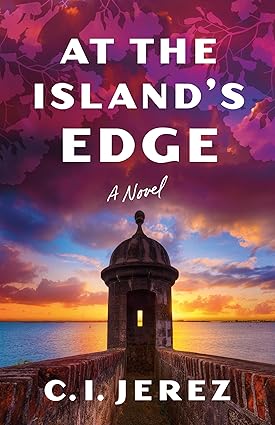
At the Island’s Edge by C. I. Jerez


At the Island’s Edge by C. I. Jerez
Publisher: Lake Union Publishing
Genre: Contemporary, Fiction
Rating: 4 stars
Reviewed by Ginger

An Iraq War veteran returns to Puerto Rico to reconnect with―and confront―the past in a heart-wrenching novel about duty, motherhood, and the healing power of home.

As a combat medic, Lina LaSalle went to Iraq to save the lives of fellow soldiers. But when her convoy is attacked, she must set aside her identity as a healer and take a life herself.

Although she is honored as a hero when she returns to the US, Lina cannot find her footing. She is stricken with PTSD and unsure of how to support her young son, Teó, a little boy with Tourette’s. As her attempts to self-medicate become harder to hide, Lina realizes she must do the toughest thing yet: ask for help.

She retreats to her parents’ house in Puerto Rico, where Teó thrives under her family’s care. Lina finds kinship, too―with a cousin whose dreams were also shattered by the war and with a handsome and caring veteran who sought refuge on the island and runs a neighborhood bar.

But amid the magic of the island are secrets and years of misunderstandings that could erode the very stability she’s fighting for. Hope lies on the horizon, but can she keep her gaze steady?

Combat medic Sergeant Catalina (Lina) LaSalle-Rivera returns from Iraq a hero but struggles with the moral implications of having taken a life during an attack. Lina moves back to Puerto Rico with her son, Matteo (Teó), who has Tourette’s syndrome, to be with her family. However, hidden family secrets and past misunderstandings threaten to further drive her into a downward spiral, leaving her to question whether she can truly find healing and hope.

The early parts of the novel are engaging and emotional, particularly as Lina navigates the growing tension between her personal turmoil and her family. Lina’s journey is compelling and heart-wrenching, but it seems her life has always been overshadowed by sadness. She has faced pressure from her family, feeling inadequate as a female. She later grappled with feelings of disappointment after becoming pregnant and joining the Army. The family dynamic, which aimed to ensure that Lina had a better life, is understandable; however, after her return, it seems the pressure then turned to her being a good parent. Lina holds in a lot of her emotions, yet her family remains unaware of her struggles. Though I empathize with Lina, I believe she needed counseling long before the incident in Iraq.

**Warning**: For readers struggling with depression or low self-esteem, Lina’s story may be triggering.

I enjoyed the author’s story; the pacing was consistent, and there were a few twists that I did not see coming. I appreciated the cultural history and visual details of Puerto Rico, and I especially liked the inclusion of Spanish phrases throughout the book. Since I can read Spanish better than I can speak it, this was a real treat.

Lina’s story is one that many military and medical professionals can relate to. They take an oath to heal and treat those in medical need, but it can be traumatic for them if they are involved in causing someone to lose their life. Processing that experience can be heavy and difficult.

Lina was very shut off from others, trapped in her own thoughts, which were overwhelming her. Her despair led her to seek escape in alcohol. I was glad to see her courage to recognize that her drinking was problematic and to accept therapy—not only for her own well-being but also for Teo’s sake.

Although I was captivated by the story, it felt like some phrases were repeated several times throughout the book. The supporting characters, especially Tia Lisandra and Papi, often seemed one-dimensional. Tia Lisandra was very vocal and took charge of the family, but I did not fully understand her motivations. I was hoping for more details and closure between Lina and her Tia, as well as between Tia Lisandra and her daughter Dolores. It appeared that Tia Lisandra was alone and bitter, driven by pride rather than love and compassion. Papi had chauvinistic opinions, but there were conversations with Lina that revealed a loving and softer side to him. I was grateful that Lina found support from her niece Dolores and a fellow veteran, Elijah Montgomery, who helped Lina through her healing process.

The shocking revelation regarding the misunderstanding with Leonardo, Teo’s dad, seemed to indicate that the author did not want to portray Leonardo as a villain, but rather this created a family secret. Nevertheless, I was pleased that things were resolved in the end. The resolution and Lina’s redemption brought her back to feeling like a healer, enabling her to serve her country again.

The author wrote from a sensitive perspective, and I appreciated that. At the Island’s Edge is a touching exploration of trauma, healing, and the enduring power of family. Jerez crafts a compelling narrative that resonates with raw emotion, inviting readers to connect with Lina’s struggles and celebrate her resilience. This is a story that will stay with you long after you turn the final page.

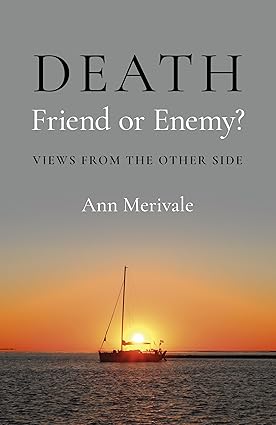
DEATH: Friend or Enemy?: Views from the Other Side by Ann Merivale


DEATH: Friend or Enemy?: Views from the Other Side by Ann Merivale
Publisher: 6th Books
Genre: Fiction, Paranormal, Contemporary, Historical
Rating: 4 stars
Reviewed by Lavender

Death, as the saying goes, is the great leveler, and though many fear it, while others view it as a blessed release, its inescapability affects us all in some way. The author of this unusual book makes use both of her spiritual reading and of the knowledge she gained from 20-plus years’ experience of taking her Deep Memory Process clients back to deaths in their previous lives, thus giving a broad spectrum of possible post-death scenarios. These she illustrates with a combination of famous and fictional characters, drawn both from accounts that came from the ‘other side’ through her figurative pen and from factual research. Part of the book’s aim is to dispel all fears of death itself and to demonstrate that the notion of eternal damnation is mistaken. At the same time, it shows the reader that whether a lifetime lasts 10 years (as did Annie Darwin’s) or 97 (like Bertrand Russell’s), it has a clear purpose and value. The stories’ precise truth is, however, immaterial, as you will find them enjoyable, educational, and reassuring.

Ann Merivale’s DEATH: Friend or Enemy?: Views from the Other Side offers a fascinating and ultimately comforting exploration of death and the afterlife, viewed through a unique lens. This book offers a captivating blend of anecdotal evidence, historical context, and spiritual insight, all aimed at demystifying our ultimate fate.

Merivale’s 20+ years of experience with Deep Memory Process, guiding clients through purported past life regressions, provides a compelling foundation for the narratives within. The author cleverly weaves together accounts purportedly channeled from the “other side” through her “figurative pen” with factual research and historical figures like Annie Darwin and Bertrand Russell. This combination lends a sense of groundedness to the more ethereal aspects of the book, making it accessible to a wider audience.

The book’s strength lies in its storytelling. The promise of personal and up-close narratives from individuals who have passed is inherently intriguing. While the review acknowledges the “precise truth” of these stories may be immaterial, the reviewer emphasizes their enjoyable, educational, and reassuring nature. This suggests that Merivale has crafted compelling narratives that resonate on an emotional and intellectual level, offering a fresh perspective on the often-feared subject of death.

The inclusion of historical context adds another layer of intrigue, suggesting a blend of personal narratives and broader philosophical exploration.

Overall, DEATH: Friend or Enemy? is a unique read. It caters to those interested in exploring the mysteries of the afterlife, past life regression, and spiritual perspectives on death. While the book’s reliance on channeled accounts might not appeal to everyone, the combination of historical figures, personal stories, and the author’s extensive experience in Deep Memory Process makes it a compelling and potentially comforting exploration of life’s ultimate question. The promise of entertainment, education, and reassurance makes this book one to pick up this year.

Sticks in a Bundle: The Early Years by Pat Spencer


Sticks in a Bundle: The Early Years by Pat Spencer
Publisher: Seaside Writer Imprint
Genre: Historical, Fiction
Rating: 3 Stars
Reviewed by Astilbe

As the middle daughter in a family of Xhosa, Zulu, and Dutch descent, Eshile Mthembu’s life celebrates the strength and resilience of the human spirit. She lives in a Soweto shanty under South Africa’s apartheid rule, a policy designed to squash her dreams and control every aspect of her life. Her story reveals a history of racial injustice many know little about, as experienced by a young woman trying to understand it herself.

Despite cultural, religious, and linguistic differences, Eshile’s family bases their love and strength on the African proverb: Sticks in a bundle are unbreakable. But when a stranger from afar offers an unexpected opportunity, Eshile must decide whether to secure her family bonds or embrace the promise of a better life.

Love is stronger than hate.

One of the tropes I enjoy reading about the most involves exploring the differences between how children and adults understand the same thing. What seems clearcut and sensible to a grownup might be utterly confusing to a kid, and vice versa. Eshile and her sisters had all sorts of questions about adult matters, from why they weren’t supposed to walk in certain neighborhoods to what happened to their Dutch birth father. Their answers to these questions made me smile and made me want to keep reading.

The large cast of characters made it difficult for me to get to know the majority of them well even though this was nearly 300 pages long. There simply wasn’t enough time to dive deeply into most of their personalities, especially given how young Eshile was when most of these events took place. She wasn’t yet old enough to think critically about most of the adults around her, much less wonder why they made more complex decisions in life. As much as I liked the protagonist herself, this made it difficult for me to bond with her large extended family or many neighbors and friends who popped into their lives every so often.

Some of the most memorable scenes for me were the ones that explored how Eshile’s family passed down some Xhosa and Zulu traditions while modernizing or skipping other ones as the 1960s went on. There was so much emotion involved in some of them, and even the easier decisions were still make with caution and care. This evolution is something people from every culture tend to need to do from time to time, and I nodded along as I took note of the similar reactions to change between these characters and members of my own family who have felt all sorts of emotional reactions to how our traditions have remained constant, changed, or simply been modified from one generation to the next.

I struggled with the slow pacing. Even though I appreciated the detailed descriptions of Eshile’s cultural and ethnic backgrounds, pausing so often to explain what certain words meant or why characters expected specific behaviors from each other meant that the plot couldn’t move very quickly in most places. Sometimes this read more like a sketch of a large, complex family than a story that could be divided into a beginning, middle, and end in even the loosest interpretations of how novels are generally paced.

There are all sorts of interesting cultural and social reactions to families whose members come in a range of colors and ethnic identities. While my extended family has never faced the threat of legal trouble or jail time for being multiracial like these characters did, I did relate to how they navigated a world that may be kind to us one day and angry at our very existence the next. Representation matters not only for people who belong to the group being explored but also to readers who have never had to think about such things and may learn something new about what their neighbors, acquaintances, coworkers, and the strangers they pass by on the street quietly deal with. The more empathy we develop for each other, the better.

Sticks in a Bundle: The Early Years was thought provoking.

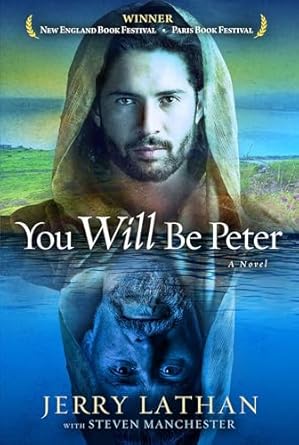
You Will Be Peter by Jerry Lathan with Steven Manchester


You Will Be Peter by Jerry Lathan with Steven Manchester
Publisher: Forefront Books
Genre: Historical, Inspirational, Fiction
Rating: 5 stars
Reviewed by Lavender

He’s one of the most well-known figures in cultures around the world, etched into stained glass, painted in frescoes, even caricatured as standing at the gates of heaven with a long white beard and keys in hand. But long before he was portrayed as a venerated and untouchable figure, Peter was simply known as Simon, a twenty-something fisherman in a far-flung Jewish province controlled by the Roman Empire.

Loyal and faithful, impetuous and passionate, Simon’s quiet life is upended by the arrival of a man called Jesus of Nazareth, rumored to be the long-awaited Messiah who would rescue the Jewish people from oppression. When Simon meets Jesus, the mysterious man tells him, “You will be Peter,” a prophetic statement that would slowly transform Simon’s life. Eager to be free of the Romans, Simon joins Jesus in hopes that he can guard this leader who will, undoubtedly, build an army to challenge Rome. But as Simon waits for the army to form, he watches Jesus show a compassion for others Simon has never seen before. The miracles Jesus performs—healing the sick, feeding crowds of thousands—show not a display of military might, but of service and love.

Real, relatable and impeccably researched, You Will Be Peter draws on the four Gospel accounts to weave Simon Peter’s story into one seamless tapestry. Readers get a front-row seat to Simon’s three-year walk with Jesus, as Simon watches the Son of Man feed the hungry, raise the dead, upend the status quo and challenge the elite during one of world history’s most pivotal seasons.

In perhaps one of the greatest miracles, we can see ourselves in Simon, this ordinary man Jesus chose to accompany Him. Simon wasn’t well-educated, but he was faithful and headstrong. Though he could rush to judgment and use a foul word from time to time, he was the kind of friend who loved fiercely and was doggedly loyal—until he wasn’t. Although he failed, Simon wasn’t cast away from Jesus’ mission. In fact, his failures and subsequent redemption made him a more empathetic and capable rock upon whom the Church was built.

With storytelling artistry that transports readers to the first-century world, with the sights, sounds, and smells of that time, You Will Be Peter shares an age-old story told from a new set of eyes: it’s possible for one ordinary person, however unlikely, to change the world forever.

In You Will Be Peter, authors Jerry Lathan and Steven Manchester craft a remarkable narrative that revisits the life of one of history’s most iconic figures, Simon Peter. Often depicted in religious art as the esteemed apostle with keys in hand, Peter’s origins as an ordinary fisherman are seldom explored in depth.

This story delves into the transformative journey of Simon Peter as he encounters Jesus of Nazareth, illustrating how an uneducated man’s faith and loyalty can lead to a monumental impact on the world. At the story’s outset, we meet Simon, a young fisherman living under the overbearing rule of the Roman Empire. His life is one of simplicity and routine, until the arrival of Jesus, a man whose reputation as the Messiah incites hope among the Jewish people. The moment Simon meets Jesus, his life is irrevocably altered when he hears the words, “You will be Peter.” In this prophetic declaration lies the promise of transformation—not only of his name but also of his identity and purpose. Here, Lathan and Manchester effectively set the stage for a profound exploration of faith, loyalty, and the potential for change in every individual.

As Simon embarks on his journey with Jesus, he initially envisions a rebellion against their Roman oppressors. The expectation of military might is soon overshadowed by the reality of Jesus’ teachings and actions, which emphasize compassion, service, and love over violence and dominance. Through miraculous acts, such as healing the sick and feeding the hungry, Jesus reveals a different kind of strength—one rooted in humility and selflessness. This evolution of Simon’s understanding is pivotal; it illustrates how personal growth often occurs through witnessing the exemplary qualities of others. The authors adeptly capture Simon’s internal conflict as he grapples with his hopes for a warrior Messiah and the reality of Jesus’ mission. One of the most compelling aspects of You Will Be Peter is its portrayal of Simon as a flawed yet relatable character. He is not depicted as a paragon of virtue but rather as a passionate individual who occasionally falters. His impetuous nature leads him to make hasty judgments, and he experiences moments of failure—most notably when he denies knowing Jesus during the latter’s trial. These human shortcomings resonate with readers, reminding us that imperfection is part of the human experience. However, what truly sets Simon apart is his capacity for redemption.

The story reveals that failure does not equate to disqualification from purpose; rather, it can become a catalyst for growth and deeper empathy. This theme of redemption is integral to the narrative and underscores the belief that everyone, regardless of their past, can contribute meaningfully to the greater good. The authors also excel in their vivid storytelling, transporting readers to the first-century world filled with sensory details—the sights, sounds, and smells of the time. This immersive approach allows readers to experience the historical context that shaped Simon Peter’s journey. It emphasizes the urgency and significance of Jesus’ mission during a pivotal moment in history. By placing Simon at the forefront of this narrative, Lathan and Manchester invite readers to see themselves in this ordinary man—their struggles, their hopes, and their potential for change.

Ultimately, You Will Be Peter serves as a powerful reminder that even the most unlikely individuals can alter the course of history. Simon Peter’s transformation from a humble fisherman to the foundational rock of the Church illustrates that greatness is often born out of everyday experiences, faith, and the willingness to embrace one’s calling, even amidst uncertainty. This narrative not only reexamines the life of a biblical figure but also challenges readers to reflect on their journeys, encouraging them to embrace their imperfections and recognize the potential for greatness within themselves. Through Simon’s story, we learn that the path to making a difference in the world begins with a single step of faith.

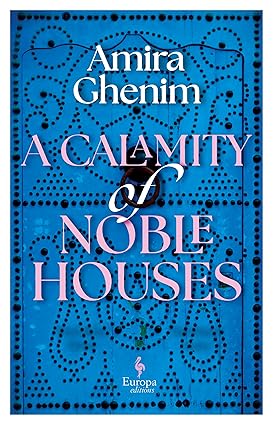
A Calamity of Noble Houses by Amira Ghenim


A Calamity of Noble Houses by Amira Ghenim
Publisher: Europa Editions
Genre: Historical, Fiction
Rating: 4 stars
Reviewed by Lavender

Tunisia, 1930s. Against the backdrop of a country in turmoil, in search of its identity, the lives and destinies of the members of two important upper-class families of Tunis intertwine: the Ennaifer family, with a rigidly conservative and patriarchal mentality, and the Rassaa, open-minded and progressive.

One terrible night in December 1935, the destiny of both families changes forever when Zbaida Ali Rassaa, the young wife of Mohsen Ennaifer, is accused of having had a clandestine love affair with Tahar Haddad, an intellectual of humble origins known for his union activism and support for women’s rights. The events of that fateful night are told by eleven different narrators, members of the two families, who recall them in different historical moments, from the 1940s to the present day. The result is a complex mosaic of secrets, memories, accusations, regrets, and emotions, taking the reader on an exciting journey through the stories of individuals caught up in the upheavals of history.

Set against the backdrop of Tunisia in the 1930s, readers see a country that is rebelling and trying to find itself. We discover this through the eyes of several characters living through the vibrant energy all around them. Certain things are forbidden and tried anyway.

Zbaida Ali Rassaa is accused of cheating on her husband with Tahar Hadda, a man of humble origins, but quite an interesting one. He is an activist and wants to improve the lot of women. The accusation of infidelity between the two characters creates great trouble for the families. As secrets are uncovered, readers get to know the characters on a more intimate level.

This story is an entertaining way to learn about an exotic culture in times past. It comes across as realistic. Though the book is educational, it is also fun to follow along with the different people being affected throughout the tale. Emotions will be evoked, and readers are sure to have their favorite characters while being thrown into a foreign yet relatable world.

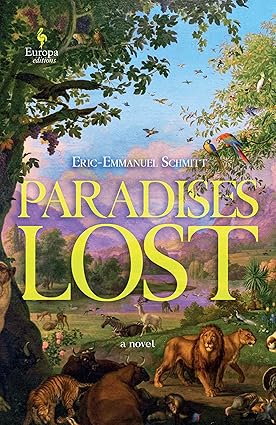
Paradises Lost by Eric-Emmanuel Schmitt


Paradises Lost by Eric-Emmanuel Schmitt
Publisher: Europa Editions
Genre: Historical, Fiction
Rating: 5 stars
Reviewed by Lavender

The first volume of what promises to be a singular literary adventure: to recount the whole of human history in the form of a single, long novel.

Noam is a young man when the Flood wreaks havoc on the world, destroying the peaceful lakeside village he called home, and turning his life upside down. Destined to live forever as an immortal, Noam travels through the centuries in search of the meaning of life, and the events which shaped who we have become today.

Paradises Lost is the first installment of Eric-Emmanuel Schmitt’s monumental project of recounting the history of humanity, the fruits of more than thirty years of research. The first in a series, and in the form of a stylish novel that blends the narrative nonfiction of Yuval Noah Harari with the adventure novels of Alexandre Dumas. Schmitt combines his scientific, religious and philosophical research to propel readers from one world to another, and from pre-history to today.

This story is the first in a grand series, covering human history. It starts at life before the big flood. Noam is the protagonist, an immortal who describes the world from his point-of-view. Noam lives in a village by a lake, the son of the chief, and the characters around him each have their own unique story.

Noam’s relationship with his family and friends is complex and layered. He and his father have an especially complicated connection. Noam does not know whether to admire or despise his father. There are women in Noam’s life, and he must tread carefully concerning his decisions around them.

When Noam leaves his village to live in the wild, he makes some interesting discoveries and meets people he could never forget. The adventure continues, and it is unpredictable.

There are themes of nature and the earth—caring for it—and family, love, friendship, the future, and many others interwoven throughout this epic tale. Readers also get a glimpse into Noam’s distant future.

Throughout the book, there are footnotes, describing Noam’s thoughts on life and universal topics. These insights are thought-provoking. He refers to different points of history.

Overall, this is a satisfying read, and the next installments are sure to just as engaging.

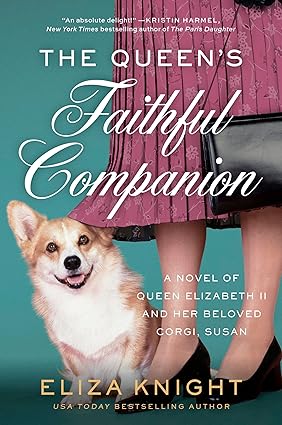
The Queen’s Faithful Companion by Eliza Knight


The Queen’s Faithful Companion by Eliza Knight
Publisher: HarperCollins
Genre: Historical, Fiction
Rated: 5 stars
Review by Snapdragon

A reigning queen…

Elizabeth wasn’t born to be queen. But when her uncle abdicates and her father steps in as king, everything in her life changes. There is one thing that never wavers, however: her endearing love of her Corgis—especially the new puppy Susan, a gift for her eighteenth birthday. Susan is by her side during Elizabeth’s WWII service, falling in love with Philip and getting married, the death of her father King George VI, her accession to the throne, the birth of her first child, and the early struggles with running a country—an ever-present reminder to find the balance between self and crown.

A loyal servant…

Hanna Penwyck has grown up with her family in service to the crown. Awkward and shy, she has a connection with nature, animals—and the young princesses at Windsor. When she becomes the Keeper of the Queen’s Corgis, her job is to maintain the health and wellness of those most prized companions. With their shared love of the dogs, the Queen can open up to Hanna and feel free to be herself, so that is a service she happily provides as well.

A faithful companion…

From the moment Susan became a royal dog, her duty was clear: To remind Elizabeth that she is more than just a queen, she is a human, and what matters is not just duty and honor, but connection, family, and unconditional and enduring love. Susan is the keeper of memories, of secrets. Through Susan we gain a dog’s eye view of royal life, human relationships, and the heartwarming bond between a queen and her beloved companion.

Three voices and three characters ring through clear and understandable in “The Queen’s Faithful Companion.” We’re in 1939 Britain and there is the one who will one day be queen, the one who follows in her family’s footsteps to serve the royalty…and the dog. Honestly having the voice of the dog, a Welsh Corgi, gave me pause. Would the dog’s point of view ruin what otherwise promised to be an interesting behind-the-scenes tour of a hugely important, and interesting, period of time? To say nothing of how one might portray the famed queen. The third character, Hanna, is perhaps the most relatable, at the outset.

Happily, from the first, Ms. Knight’s skill draws the reader in–not only with believable characters, but with a storyline that takes off immediately. It is wartime, after all. The backdrop of the war and its effects are not only seen through the eyes of the royals, but also through a particular servant, Hanna. The direct experience of it, the sound and smells of war, for that we thank Susan, the Corgi.

This really is an intriguing look not only at the times, but at the personalities, and the personal challenges, of each. The author is not afraid to allow a touch of humor, so it is not all grim wartime reporting- far more important are the characters.

I found “The Queen’s Faithful Companion” to be a fun, compelling read, while at its center is something both thoughtful and heartfelt. Utterly charmed, I’m giving this one five solid stars. Do read!