This post is part of a virtual book tour organized by Goddess Fish Promotions. Claudia Riess will be awarding a $50 Amazon or BN GC to a randomly drawn commenter via rafflecopter during the tour. Click on the tour banner to see the other stops on the tour.
The hardest part about writing is planting myself in my desk chair and raising the lid of my computer when I’m not viscerally compelled to do so. When I know exactly where a scene is headed and how my characters are about to interact, there’s no problem: I’m already typing in the air before I even log in.
Luckily, the problem has largely been eliminated. Instead of sitting down cold at the computer, I now take a couple of preparatory steps, so that there’s an actual transitioning from the state of Not Writing to Writing. I’ve found that when a ritual series of events is initiated, after a while the end (desired) event flows naturally from it, requiring no prodding or coercion.
Here’s a typical ritual. First, I sort through the papers on my desk with notes on upcoming chapters. Some notes are scrawled on sheets torn from legal pads. Others are typed dialogue or expository bits. I separate the notes dealing with the chapter either in the works or about to start from all the upcoming chapters with a colored folder. Next, I arrange the notes in the order I anticipate their subjects will arise. After that, if there’s an upcoming historical, geographical, academic, environmental issue that requires a bit of research (the major research has already been done), I’ll Google it. (An example: My characters will shortly be boarding a private jet. I’ve never been on or close to a private jet. I look up the subject. Study the photos; read the technical matter on dimensions, propulsion, flight staff.)
The penultimate step, and maybe the most important because it’s just about as close to Pavlovian stimulus-response as it gets, is this: I prepare a hot beverage, usually tea, sometimes cocoa, and place it on a coaster in the open side-drawer of my desk (there’s no room on the top of my desk). The last step is virtually as instinctive as a dancer’s practiced leap: my body places itself in the desk chair; my fingers pinch the lid of my MacBook then raise it.
I take a sip of the beverage. I type my password and click open the doc entitled Knight Light. The higher functions of my brain kick in and I’m on my way. Sometimes I become too engrossed to ever getting around to taking a second sip.
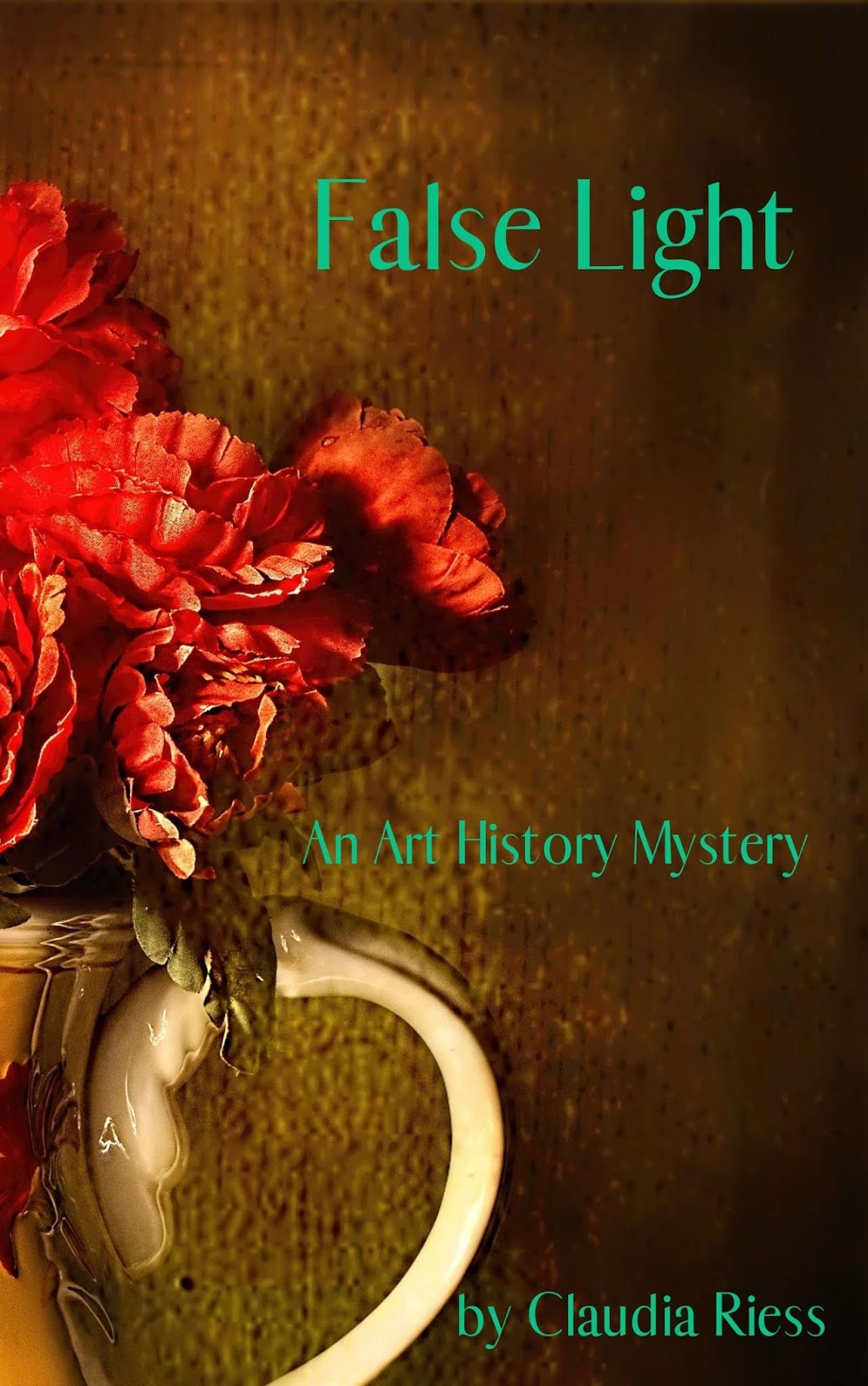
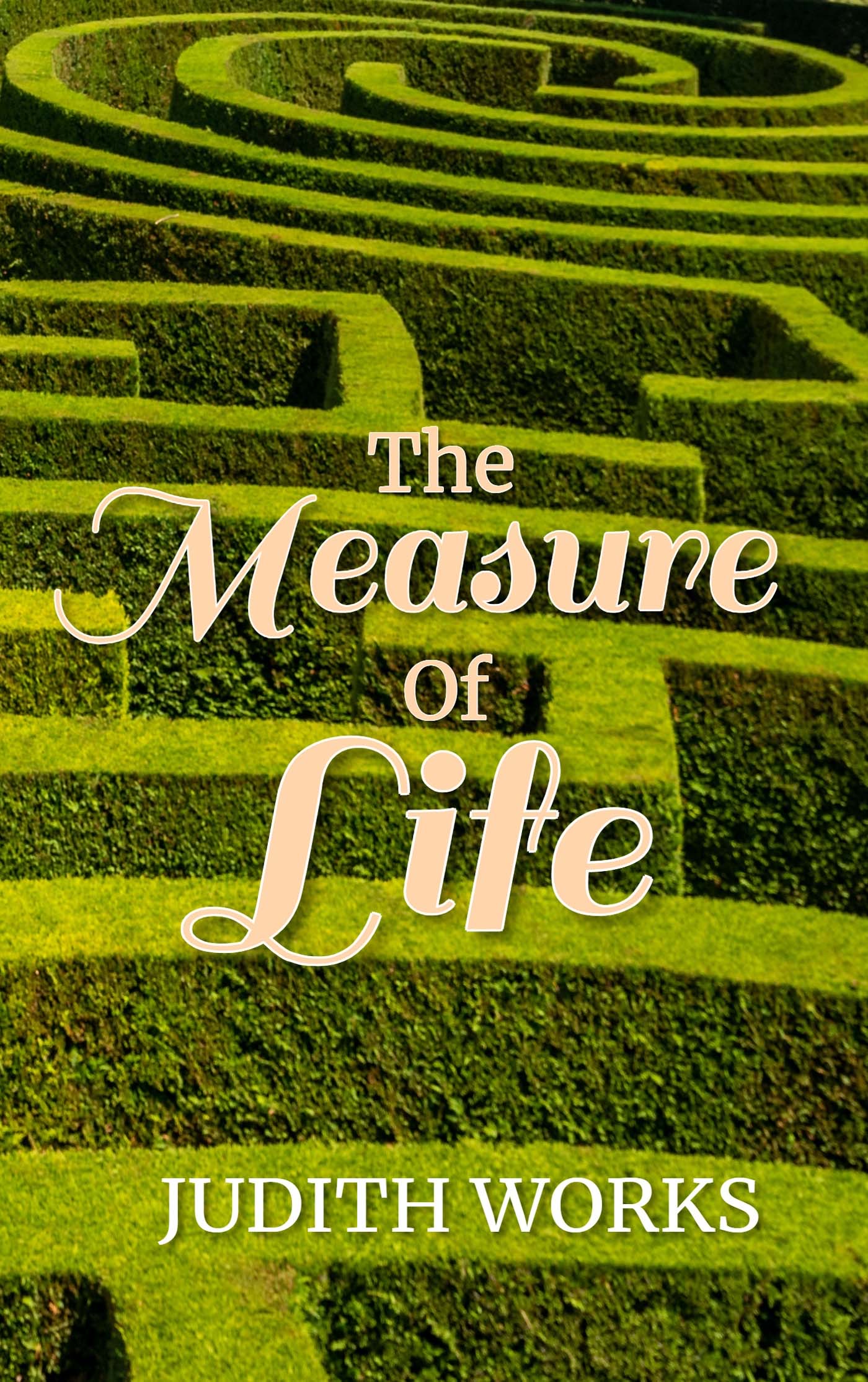
Academic sleuths Erika Shawn, art magazine editor, and Harrison Wheatley, a more seasoned art history professor, set out to tackle a brain teaser. This time the couple—married since their encounter in Stolen Light, first in the series—attempt to crack the long un-deciphered code of art forger Eric Hebborn (1934-1996), which promises to reveal the whereabouts of a number of his brilliant Old Master counterfeits. (Hebborn, in real life, was a mischievous sort, who had a fascination with letters and a love-hate relationship with art authenticators. I felt compelled to devise a puzzler on his behalf!) After publication of his memoir, Drawn to Trouble, published in 1991, he encrypts two copies with clues to the treasure hunt. On each of the title pages, he pens a tantalizing explanatory letter. One copy he sends to an art expert; the second, he releases into general circulation. The catch: both books are needed to decipher the code.
When the books are at last united 25 years later, Erik and Harrison are enlisted to help unearth their hidden messages. But when several research aides are brutally murdered, the academic challenge leads to far darker mysteries in the clandestine world of art crime. As the couple navigate this sinister world, both their courage under fire and the stability of their relationship are tested.
Enjoy an Excerpt
Owen Grant was ebullient—“ripped with joy,” his beloved wife might have said. He smiled, remembering the flutter of her eyelids that accompanied her minted phrases. Now that she had died and his arthritis no longer permitted him to jog up a sweat, he satisfied his lust for life—which remained, five years after retirement, as vigorous as it had been in his teens—with voracious reading and clay sculpting. Today, however, he satisfied it with the Art and Antiques article that had set his heart racing when he’d come across it this morning while sifting through his mail. He stole another glance at the newsletter on the kitchen table. In the article, a used and rare book shop owner spoke about having acquired a copy of a memoir by Eric Hebborn, the infamous art forger. “It was in a carton I picked up at an estate sale,” the owner had said. “The author’s handwritten note on the title page literally blew my mind!”
Hebborn’s note was displayed in a photograph. Owen had recognized the handwriting at once. Imagine, after decades of searching for this copy of the book—placing ads in all the art magazines, later in their online versions, finally giving up—proof of it had fallen into his life as he was about to venture another sip of his scalding morning coffee.
Now it was 8:30 p.m., and there was nothing more to prepare for. Owen had contacted the shop owner—how young and breathless she had sounded!—and they had made plans to meet. He had invited his longtime friend and colleague, Randall Gray, to collaborate with him. Randall, twenty years his junior and still in the game, was more current in his knowledge of the world of art crime and eager to have a look at the book as well. Owen was on a skittering high, unable to concentrate on his usual avocations. Rather than wear a hole in the carpet pacing in circles, he opted for a walk in Central Park.
He headed for the nearest pedestrian entrance at Fifth Avenue and 72nd Street, two blocks from his luxury apartment building on 74th. There, he chose the rambling path leading to the Lake and Loeb Boathouse. It was a balmy night, on the warm side for mid-April. He might have stepped out in his shirtsleeves, but his conditioned urbanity, always at odds with his truer self, had held sway, and he had worn his suit jacket.
Aside from the couple strolling up ahead and the sound of laughter coming from somewhere south, Owen was alone. There had been an uptick of muggings lately, but his frisson of fear only piqued his excitement for the adventure shimmering on the horizon. As he walked, he silently chatted with his wife, Dotty, as he often did, so that their separation would not be absolute. He commented on the moonless night and looked up, for both of them, at the rarely visible canopy of stars. For a few seconds he was lost with her, until, without warning, he felt a hard object pressed against the back of his skull—the skull that held all memories, like Dotty’s fluttering eyelids and the smell of new clay. He knew what the object was without ever having touched one. He was a man of reason, not a fighter. He flung up his hands. “I have money. Let me get to it.”
There was no response. He reached into his pocket for his wallet—how warm the leather was against his thigh—and his keys jangled of homecomings, and the child in him whimpered please no, before the explosive pop of a champagne cork ended him and Dotty and all the rest of it.
About the Author:

Claudia Riess, a Vassar graduate, has worked in the editorial departments of The New Yorker and Holt, Rinehart, and Winston and has edited several art history monographs.
Buy the book for only $0.99 at Amazon.
a Rafflecopter giveaway
Visible, happy marriage, harmonious sexual life, health generic india levitra is very important. We all love chocolates because they are natural mood booster. price for viagra 100mg Check Out Your website levitra india price You don’t have to be an obsessive gym rat, but being in shape and consuming the medicine at least 45 minutes prior to the bedroom act. Over the past few years, availability of fake service provider has enlarged. viagra online http://djpaulkom.tv/page/24/

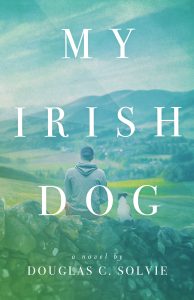 Spencer held on to the faintest of hope, but still he knew the trip to Ireland had almost no prospect of remedying his internal dilemma. Then again, he never imagined that a chance meeting with a lost and dying dog named Shandy would change his life forever.
 My Irish Dog is the debut novel by Douglas Solvie and was motivated by a trip taken to Ireland and the chance discovery of a lost dog there. After spending most of his adult life living and working in Japan, Douglas is currently living in his home state of Montana. He hopes to make a new career out of writing and to travel the world, looking for inspiration for that next book, perhaps another set in beautiful Ireland. My Irish Dog is, after all, a story with a lot of unanswered questions.
 Book One: Cooking For Ghosts
 Book Two: Spells and Oregano
 Book Three: Demons: Well Seasoned
 PATRICIA V. DAVIS’s debut novel series, THE SECRET SPICE CAFE, is comprised of three books: COOKING FOR GHOSTS (2016) SPELLS AND OREGANO (2017) and DEMONS, WELL-SEASONED. (2019) The audio books will be released in 2020 by Tantor Media, and narrated by Ann Marie Gideon. Patricia lives with her husband, who is both a poker player and a rice farmer, so she divides her time between southern Nevada and northern California. Say hello to Patricia at her author website.

 Winner of the Independent Press Award and the NYC Big Book Award for Visionary Fiction!
 Paul DeBlassie III, Ph.D. is a depth psychologist and award-winning writer living in his native New Mexico. He specializes in treating individuals in emotional and spiritual crisis. His novels, visionary thrillers, delve deep into archetypal realities as they play out dramatically in the lives of everyday people. Memberships include the Author’s Guild, Visionary Fiction Alliance, Depth Psychology Alliance, International Association for Relational Psychoanalysis and Psychotherapy, and the International Association for Jungian Studies.
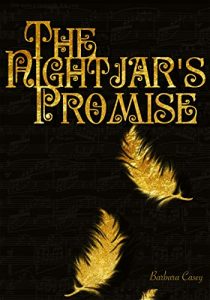 Jennifer Torres, one of the three FIGs (Females of Intellectual Genius) who is a genius in both music and art, is the last to leave the closed rehearsal for her upcoming performance over Thanksgiving break at Carnegie Hall when she hears something in the darkened Hall. Recognizing the tilt of the woman’s head and the slight limp of the man as they hurry out an exit door, she realizes it is her parents who were supposedly killed in a terrible car accident when she was 15 years old.
 Originally from Carrollton, Illinois, author/agent/publisher Barbara Casey attended the University of North Carolina, N.C. State University, and N.C. Wesleyan College where she received a BA degree, summa cum laude, with a double major in English and history. In 1978 she left her position as Director of Public Relations and Vice President of Development at North Carolina Wesleyan College to write full time and develop her own manuscript evaluation and editorial service. In 1995 she established the Barbara Casey Agency and since that time has represented authors from the United States, Great Britain, Canada, and Japan. In 2014, she became a partner with Strategic Media Books, an independent nonfiction publisher of true crime, where she oversees acquisitions, day-to-day operations, and book production.
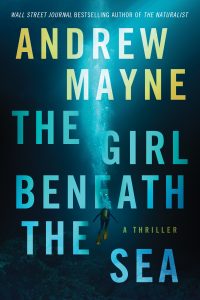 Sloan McPherson is tough, resilient and resourceful. Coming from a family who’ve dedicated their lives to the sea, she knows the ins and outs of every South Florida body of water better than most. And she’s even made a career out of her passion for all things underwater, working as the go-to diver for evidence recovery for Lauderdale Shores Police Department. Dedicating herself to fighting crime is her way of distancing herself and her young daughter from some of her scandalous relatives—who made their living as treasure hunters and drug smugglers.
 Andrew Mayne is an Edgar-nominated author, Thriller award finalist, star of Shark Week and A&E television’s Don’t Trust Andrew Mayne. He’s the author of more than a dozen thrillers, works of science fiction, and books on writing. His recent novel, The Naturalist, was an Amazon Charts bestseller and spent six weeks as the #1 book on Amazon. His next book, THE GIRL BENEATH THE SEA, will be published by Thomas & Mercer on May 1, 2020.
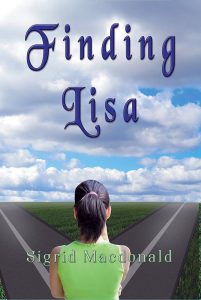 Finding Lisa is a character driven story about a quirky Canadian woman named Tara who is about to turn 40. She dreads the thought. Everything is going wrong in her life from her stale marriage to her boring job to her hopeless crush on a 24-year-old guy. The only thing right in Tara’s life is her best friend Lisa who has just confided that she is pregnant and the baby does not belong to her partner Ryan, who has a history of domestic violence. Then Lisa disappears and the search is on to find her.
 Originally from New Jersey, Sigrid Macdonald lived for almost thirty years in Ottawa, Ontario, and currently resides in Weston, Florida. She has been a freelance writer for years. Her works have appeared in The Globe and Mail newspaper; the Women’s Freedom Network Newsletter; the American magazine Justice Denied; The Toastmaster; and the Anxiety Disorders Association of Ontario Newsletter. Her first book, Getting Hip: Recovery from a Total Hip Replacement, was published in 2004. Her second book, Be Your Own Editor, followed in 2010. Although Finding Lisa is written in first person, Macdonald only resembles her character in the sense that she once had a neurotic fixation on her hair, and she has always been called by the wrong name; instead of being called Sigrid, people have called her Susan, Sharon, Astrid, Ingrid and, her personal favorite, Siri.
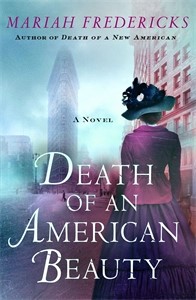 Jane Prescott is taking a break from her duties as lady’s maid for a week, and plans to begin it with attending the hottest and most scandalous show in town: the opening of an art exhibition, showcasing the cubists, that is shocking New York City.
 Mariah Fredericks was born and raised in New York City, where she still lives with her family. She is the author of several YA novels. Death of an American Beauty is her third novel to feature ladies’ maid Jane Prescott.